Town centre archaeology reveals new layers of Chesterfield’s past
An archaeological excavation in our town centre has uncovered well-preserved remains, offering fresh insight into how people lived in the area over hundreds of years.
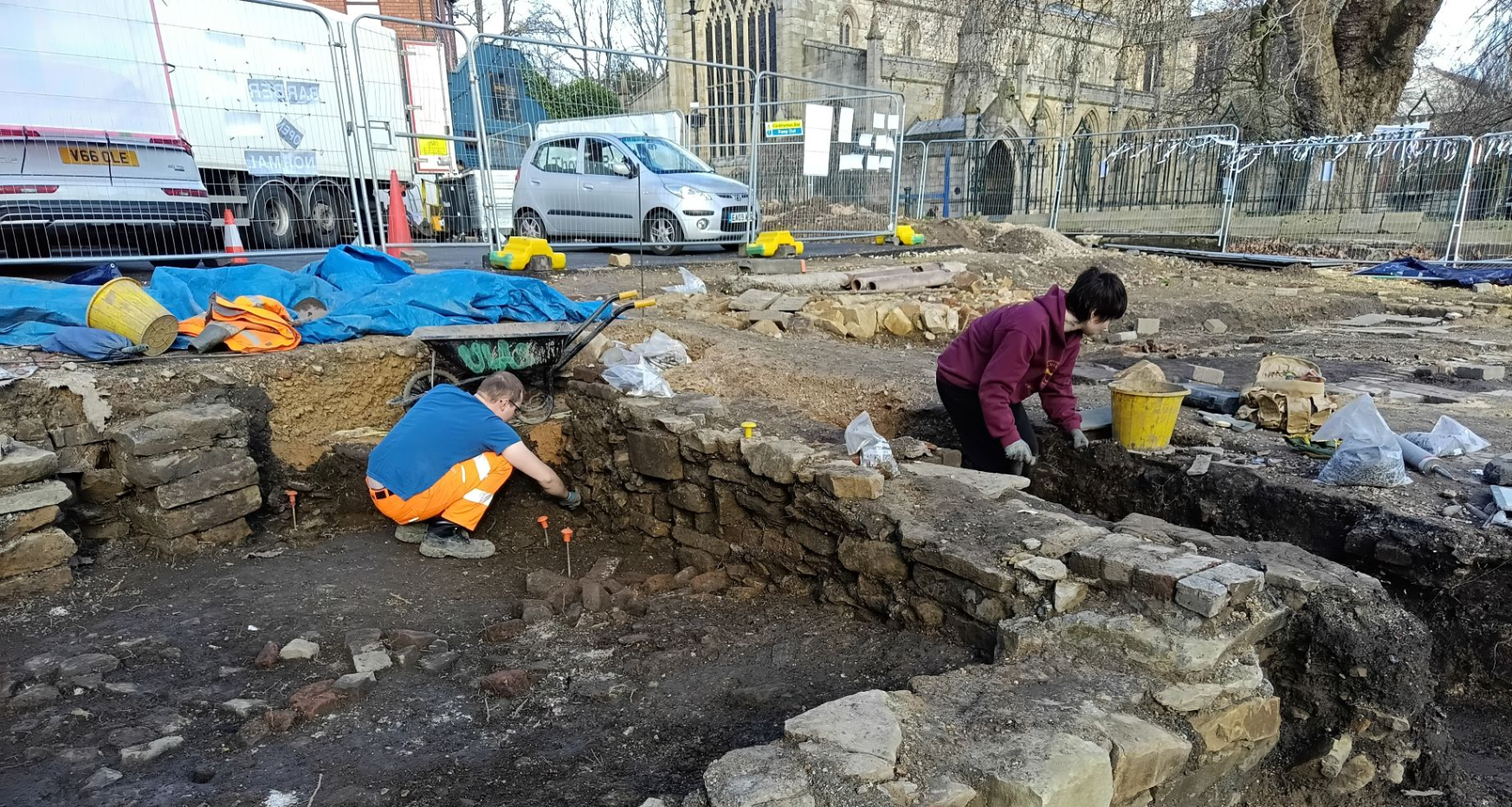
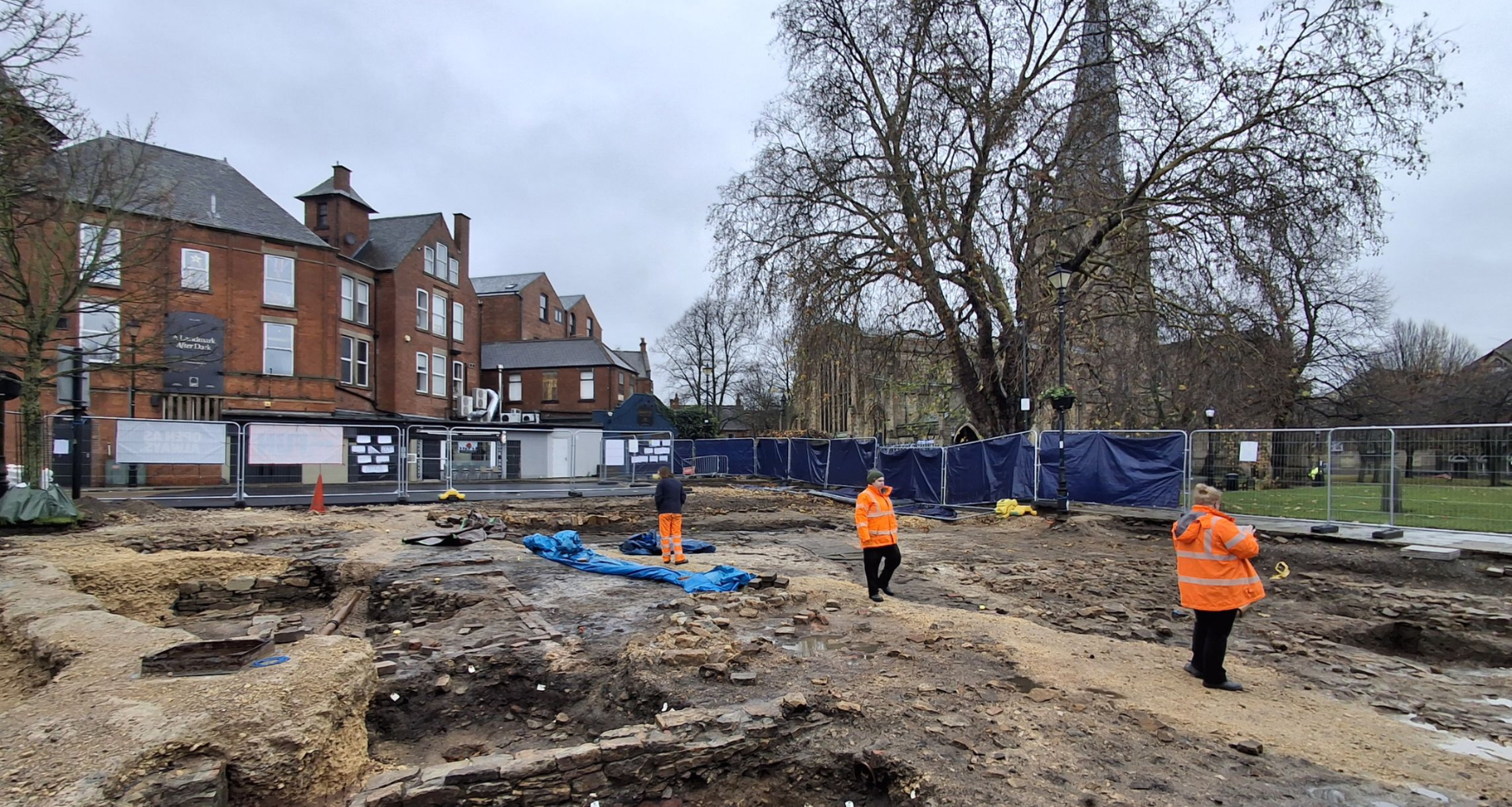
Work to transform Rykneld Square was paused last July following initial discoveries on site. Archaeologists from the University of Leicester Archaeological Services (ULAS) have now completed their investigations, revealing evidence of a sequence of buildings, including walls and floor surfaces dating from the Medieval period onwards. These remains relate to former almshouses and a row of cottages that once stood beside the Crooked Spire.
Pottery fragments dating from the Medieval period through to the 19th century were also uncovered, providing a glimpse into everyday life and the long-term use of the site. The team also discovered skeletal remains within a disused section of the historic churchyard, highlighting how its boundaries have shifted over time.
The structural wall remains will be preserved in situ and carefully covered, while the skeletal remains will be respectfully reburied on site. Pottery finds, along with a full record of the excavation, will be donated to Chesterfield Museum. Plans are also being developed to share the site’s history through new interpretation signage.
The archaeological work was led by the University of Leicester Archaeological Services (ULAS).
Councillor Kate Sarvent, Chesterfield Borough Council’s cabinet member for town centres and visitor economy, said:
“It’s interesting to get a glimpse of what life was like for people who lived in our town hundreds of years ago and we’ll make sure we preserve this knowledge for future generations.
“We are now working to restart our regeneration of this important public space to create a greener space where visitors and residents can enjoy views of our borough’s most beloved landmark, the Crooked Spire.”
John Thomas, Deputy Director of ULAS, said:
‘’It has been a privilege to work on this excavation, which has proved to be extremely interesting and will provide a new perspective on Chesterfield’s history. The archaeology is very well-preserved and shows a long period of occupation next to the church of St Mary & All Saints. Our work now will be to carefully examine the artefacts and records we have gathered to tell a detailed story of life in this part of the town.’’
Following the findings, the design for Rykneld Square is being refined to protect the archaeology while still delivering a welcoming and accessible public space.
The updated plans will retain key features such as new paving, seating, a wider pavement and a new bin store. Trees will be replaced with smaller shrubs and planting to avoid disturbing the remains. The revised design will be submitted to Derbyshire County Council in its role as the local highways authority.
Work is expected to restart on site this summer and will take around three months to complete.
The project forms part of Chesterfield Borough Council’s Revitalising the Heart of Chesterfield programme, which aims to enhance key public spaces across the town centre, supported by funding from the Government’s Levelling Up Fund.
To find out more about the Revitalising the Heart of Chesterfield project, visit: www.chesterfield.co.uk/developments