More than 200 people have seen the progress of the Chesterfield Canal restoration in Staveley, with the latest section of works now nearing completion.
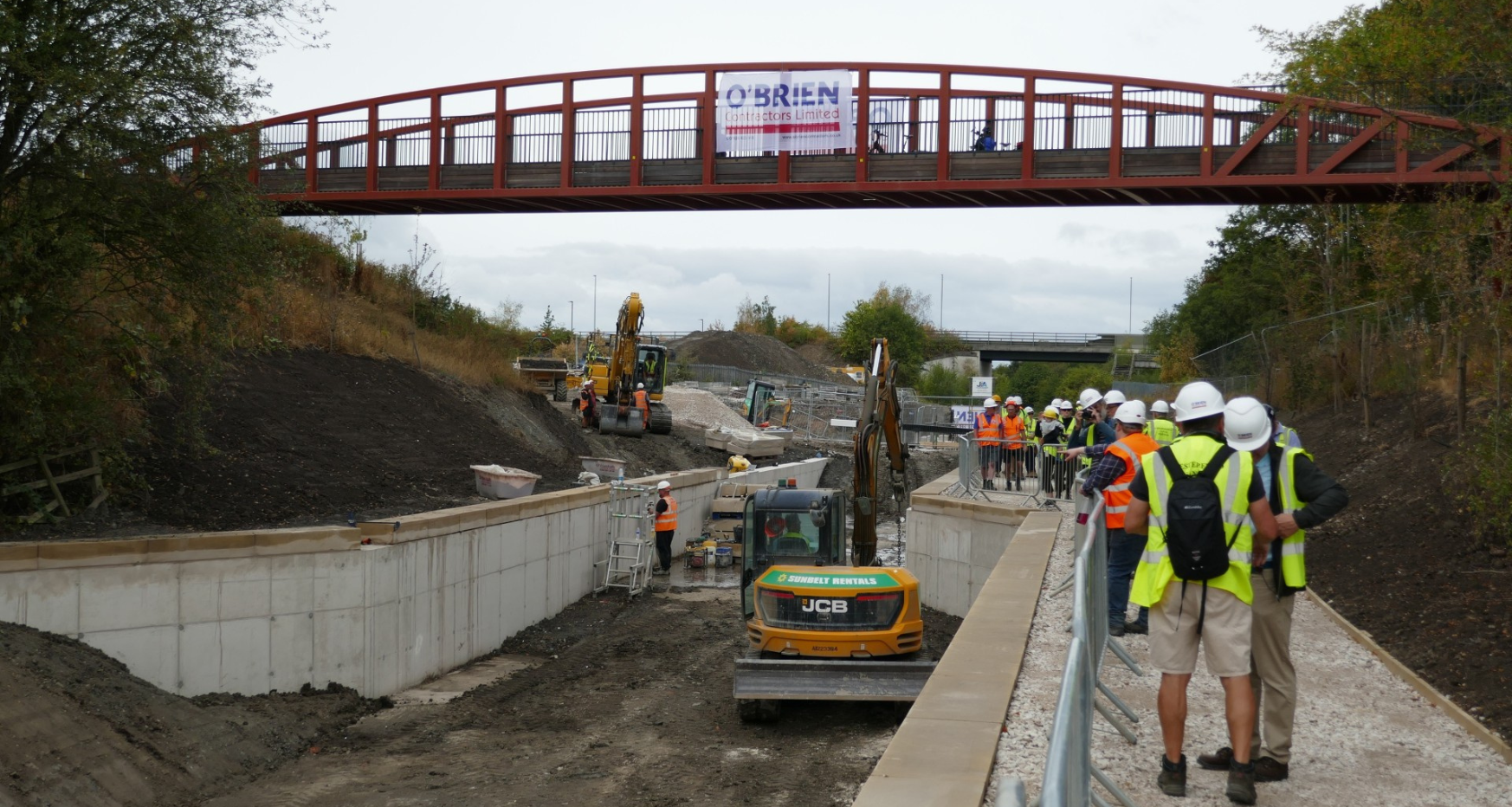
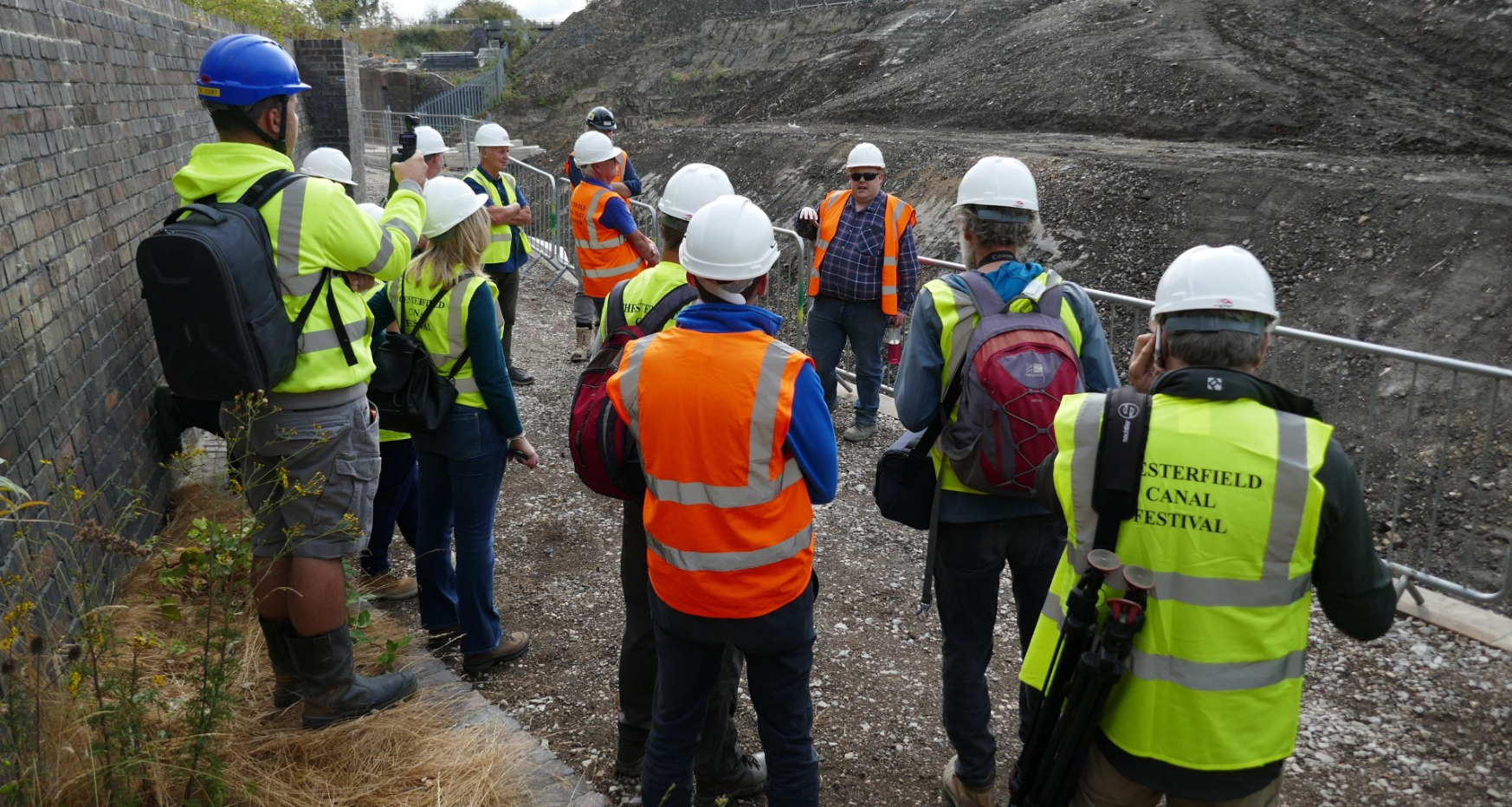
On Tuesday, 18th August 2026, the Chesterfield Canal Trust led guided walks through the restoration site, allowing visitors to see the engineering work taking place along a 450-metre section of the historic waterway.
A group of journalists were taken through the site in the morning, before members of the public were welcomed in the afternoon. Demand for the public walks was high, with all 180 tickets sold in less than 24 hours.
Rod Auton, Company Secretary, Publicity and Membership for Chesterfield Canal Trust, said:
“It was fantastic to see such a strong response to the opportunity to visit the restoration works, with all 180 public tickets selling in less than 24 hours. It was a great opportunity to show people the progress that has been made and give them a first-hand look at the work taking place to bring this section of the Chesterfield Canal back to life.
There is a huge amount of work involved in restoring this short section, so it was particularly rewarding to share the progress with the people who have been following the project.”
The works form part of a wider £6 million restoration project, supported largely through the £25.2 million Staveley Town Deal. The project is helping to reinstate a section of the canal, alongside improvements to the surrounding routes and infrastructure.
Bringing the canal back to life
Although the section being restored is relatively short, it includes a number of complex engineering features.
The former Hartington Railway Bridge abutments have been reinforced with a concrete base, while the new Keith Ayling Lock is being installed further along the route.
The lock features gates made from Fibre Reinforced Polymer (FRP), using recycled wind turbine blades. The Trust believes these are the first gates of their kind to be used on a narrow canal in the UK.
A specially designed pumping system is also being installed to raise the water level into the restored section. It has been designed to allow fish and eels to pass through safely.
Further along, work is taking place around the foundations of a former mineral railway bridge, while the future Bellhouse Bridge will feature a stop gate allowing a section of canal to be drained quickly if required.
Bellhouse Basin is also being reconstructed at its original height, around two metres above the level to which it had previously subsided.
The restoration is an important part of the wider regeneration of Staveley, helping to bring the historic waterway back into use while creating improved routes through the area.
With the latest works nearing completion, the walks provided a first-hand look at the scale and complexity of the work taking place to bring this section of the canal back to life.
For more information on the canal restoration and more developments taking place across Chesterfield, visit: www.chesterfield.co.uk/developments/